Trending

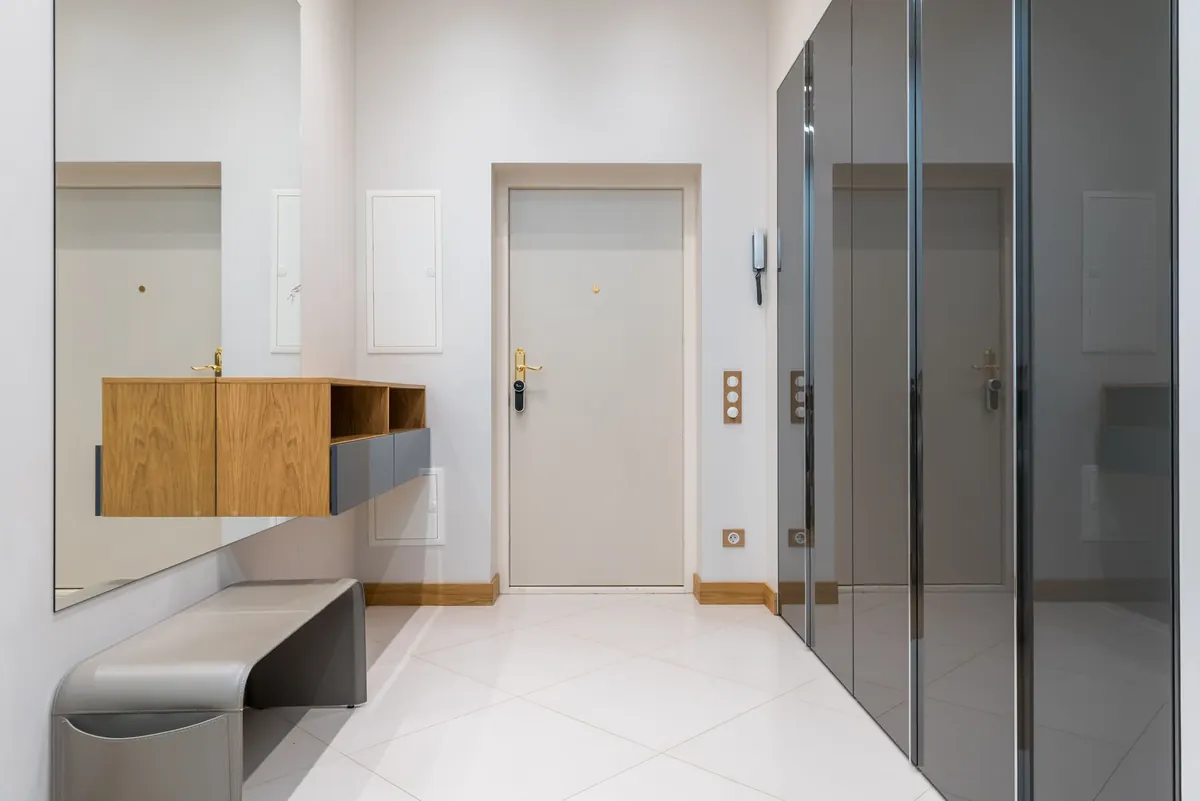
A narrow hallway asks a lot of you. It has to absorb wet coats, muddy boots, school bags, keys, dog leads and the post, often in less floor space than a single kitchen cupboard. Most hallway mess isn't caused by too much arriving — it's caused by things having no obvious home. So the fix is rarely a bigger cupboard. It's working through a checklist in the right order, so every item has a place before you buy a single basket.
Before you move anything, spend seven days paying attention to what actually lands in the hall. Keep a tally on your phone, or a scrap of paper tucked by the door. You'll quickly see the pattern: two pairs of trainers by the shoe rack, four coats on three hooks, one tote bag, and a permanent drift of unopened post on the stairs.
Then make one honest decision per item: does it belong here, or does it belong upstairs? Wellies for a daily dog walk earn their spot by the door. Smart shoes worn twice a month do not. A hallway is a transit space, not a storage room, and treating it as one is what keeps it calm.
Most hallway storage that ends up on a selling site was bought by eye. Ten minutes with a tape measure prevents that.
If you can't keep a decent walking width at floor level, go vertical instead. Slim wall-mounted pieces cost you nothing in floor space, and the hall feels wider immediately.
Shoes are the number one reason hallways feel cramped, because they arrive wet, in pairs, and in multiples. Give the floor a defined capacity and stick to it.
A rail full of hangers in a hallway looks tidy on paper and becomes a tangle in practice. Hooks are faster, and speed is what makes a system survive.
Fit double hooks rather than a long rail, and position them at a height that suits the people using them — a lower row for children saves a daily argument. Above the hooks, a single shelf with a lidded box takes hats, gloves and scarves out of the way.
The important part is the count. If you have hooks for five coats, keep five coats there. Anything beyond that migrates to a bedroom wardrobe at the change of season. Heavy winter coats also put real load on fixings, so anchor hooks into a timber batten or a stud wherever possible, rather than straight into plaster.
These four items are small, which is exactly why they spread. Give them one tight zone near the door.
A short shelf with a bowl or tray handles keys, spare change, sunglasses and the dog lead. A socket nearby means phones charge out of the walking path rather than on the floor. One hook per adult takes the everyday bag; a second hook holds the reusable shopping bags. Post gets a letter rack or tray, and the tray gets emptied weekly — post multiplies if you let it.
If you commute with a lanyard or work pass, a small hook at eye level beside the door saves the daily patting of pockets.
Open benches with space underneath look lovely in photographs and become a dumping ground within a fortnight. Deep cupboards you can't see into hide clutter rather than solving it. Anything requiring two hands and a lifted lid for something you use daily will be abandoned by week three. Choose the lazy option deliberately: open trays, visible hooks, shallow shelves.
No hallway stays clear on its own, and it doesn't need a big clear-out to stay that way. Once a week, empty the key tray, return stray shoes to bedrooms, wipe the boot tray, check the coat hooks are at capacity, and bin or file the post. Twice a year, at the change of season, swap heavy coats for lighter ones and put away winter boots.
Keep the walking route clear, keep the counts honest, and the hallway does its job quietly. That is the whole checklist — audit, measure, count, reset.
Photo: Max Vakhtbovych / Pexels