Trending

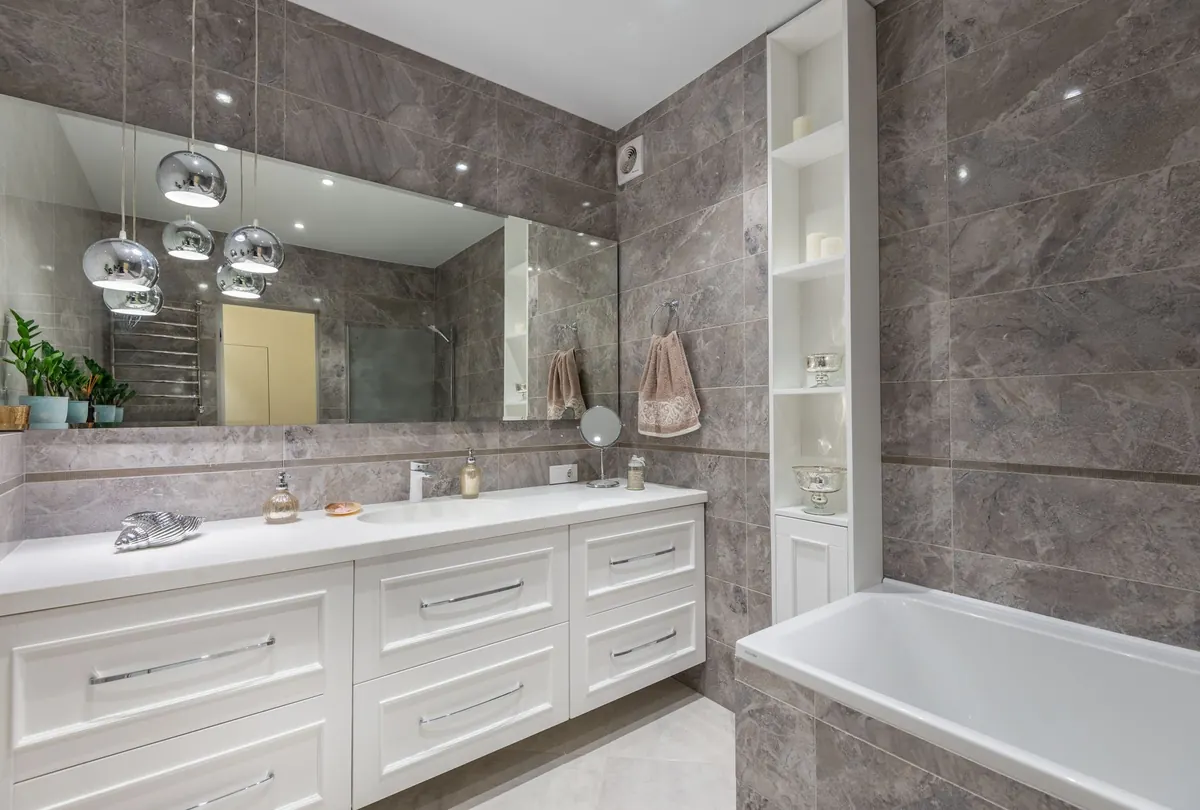
Most British bathrooms are asked to do a lot with very little. A box room off the landing, a shower over the bath, a basin wedged between the door and the radiator — and somehow it has to hold towels, toiletries, cleaning supplies and everyone's shampoo. The answer is rarely more floor space. It is better use of the walls, materials that won't warp in the steam, and a honest sort-out of what actually needs to live in there.
Nothing kills bathroom storage faster than damp. Chipboard swells, MDF crumbles at the edges, cheap mild steel rusts from the inside out, and adhesive hooks give up the moment the tiles get warm. Before you buy anything, check what it is made of.
Whatever you choose, ventilation matters more than any coating. A working extractor fan, a window opened after a shower and a quick squeegee of the tiles will do more for your shelving than any special finish.
In a compact room, shelf depth is the enemy. A 10–12cm shelf is plenty for bottles and jars; 15–20cm will take folded towels. Anything deeper above a basin and you will be ducking every time you brush your teeth. Keep the underside of the lowest shelf at least 30cm above the tap so tall bottles still fit.
Tiled walls hide pipework. Run a pipe and cable detector over the area before any drill goes near it, and think about where the shower feed, waste pipe and any boxing-in runs. Avoid drilling directly above a basin or toilet if pipework drops down from the floor above or rises from the floor below. If you rent, ask before you drill — or skip the drill altogether and protect your deposit.
Corner shelves are the quiet winner here. A pair of triangular glass or steel shelves in the corner above the bath holds shampoo, conditioner and a flannel without stealing an inch of usable width. If you have a shower cubicle, a two-tier corner shelf on a tension pole avoids drilling entirely.
The strip of wall above the cistern is the most under-used real estate in the house. It is usually 60–70cm wide and completely clear, and it will hold more than you think.
Two rules keep these units usable. First, leave room to lift the lid and reach the flush — a bottom shelf at least 20cm above the cistern usually does it. Second, don't block the window. A shelf that kills the only natural light in a small bathroom makes the room feel like a cupboard, however tidy it looks.
If you are replacing a unit, drawers beat doors every time. A single deep drawer holds more usable storage than the same volume of cupboard, where the bottle trap and pipework swallow the middle. If drawers aren't an option, fit two or three lidded slim boxes either side of the trap and a shallow shelf that sits around it rather than through it.
Widths of 500–600mm are common in smaller UK bathrooms. A wall-hung unit shows more floor, which makes a narrow room feel wider and makes mopping easier. In an awkward corner, a dedicated corner cabinet will hold far more than a straight one pushed into the same gap.
A mirrored cabinet above the basin gives you storage and light in one footprint. If you want a shaver socket inside it, that needs proper wiring — use a qualified electrician rather than extending a circuit yourself.
Small items are where a compact bathroom descends into chaos. A caddy is the hardest-working piece you can buy: it gathers everything you reach for daily and lifts it off the surfaces you need for drying. If you share a bathroom, give each person their own caddy and let them take it in and out.
Storage only works if it is maintained. Once a fortnight, empty one shelf, wipe it dry and put back only what you have used since the last time. Bin half-empty bottles, sachets from hotel rooms and the hair product you tried once. If you are buying something new, something old goes.
Wipe caddies and shelf edges with a damp cloth, dry the corners where water pools, and check the silicone around the bath and shower for lifting edges. Then look at your extractor fan or window again: if the mirror is still foggy ten minutes after a shower, the room is holding moisture, and no amount of clever shelving will fix that.
Photo: Max Vakhtbovych / Pexels